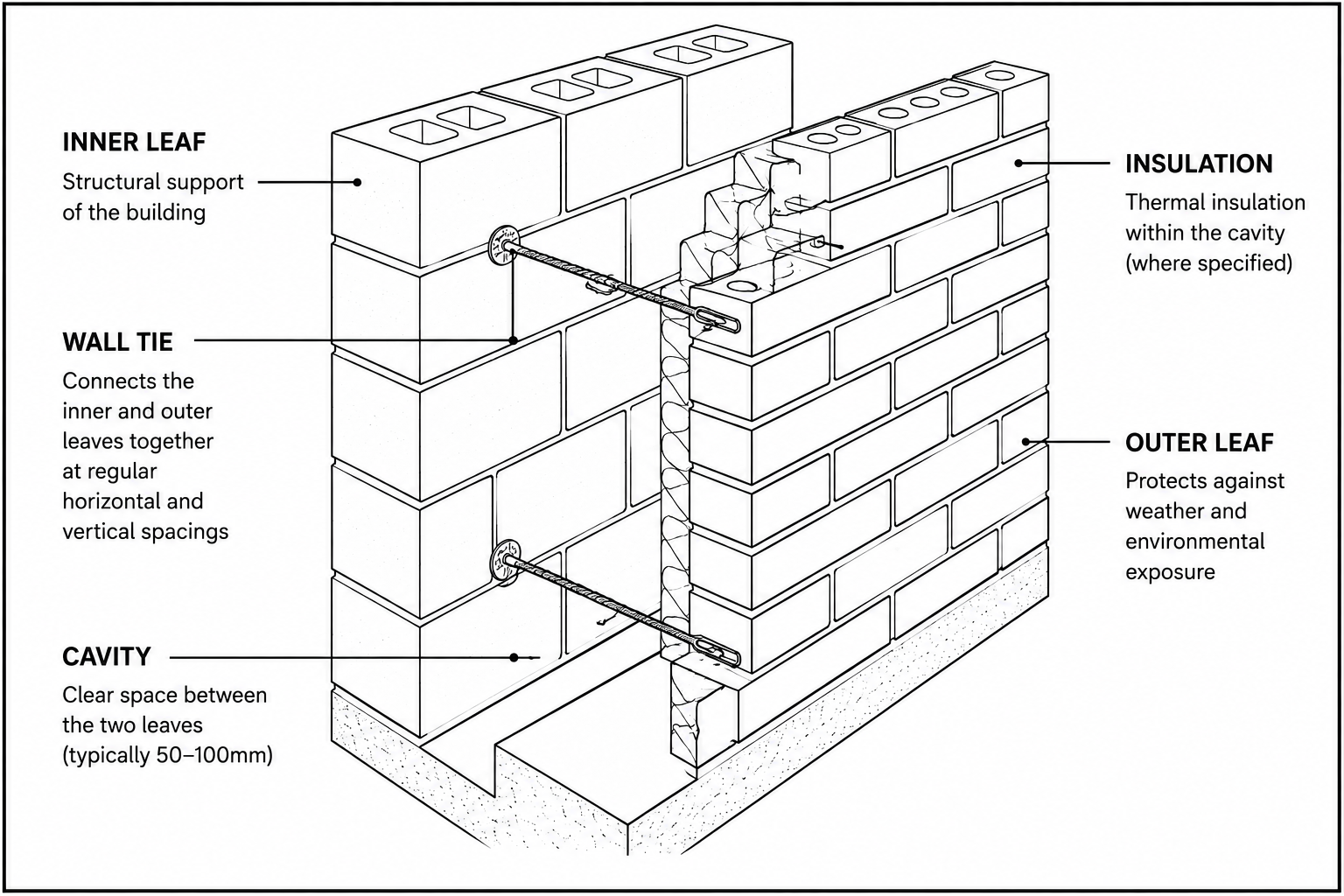
What are wall ties?
Most cavity-wall buildings have an inner and outer leaf of masonry separated by a cavity. Wall ties connect the two leaves so that they act together as a stable wall.
Why can wall ties become a problem?
Older mild-steel wall ties can corrode over time. As corrosion develops, the tie may lose strength and the expanding corrosion products can also disturb the surrounding masonry. How quickly this happens will depend on the type and age of the ties, their original protection and the conditions to which the building has been exposed.

Possible signs of wall tie problems
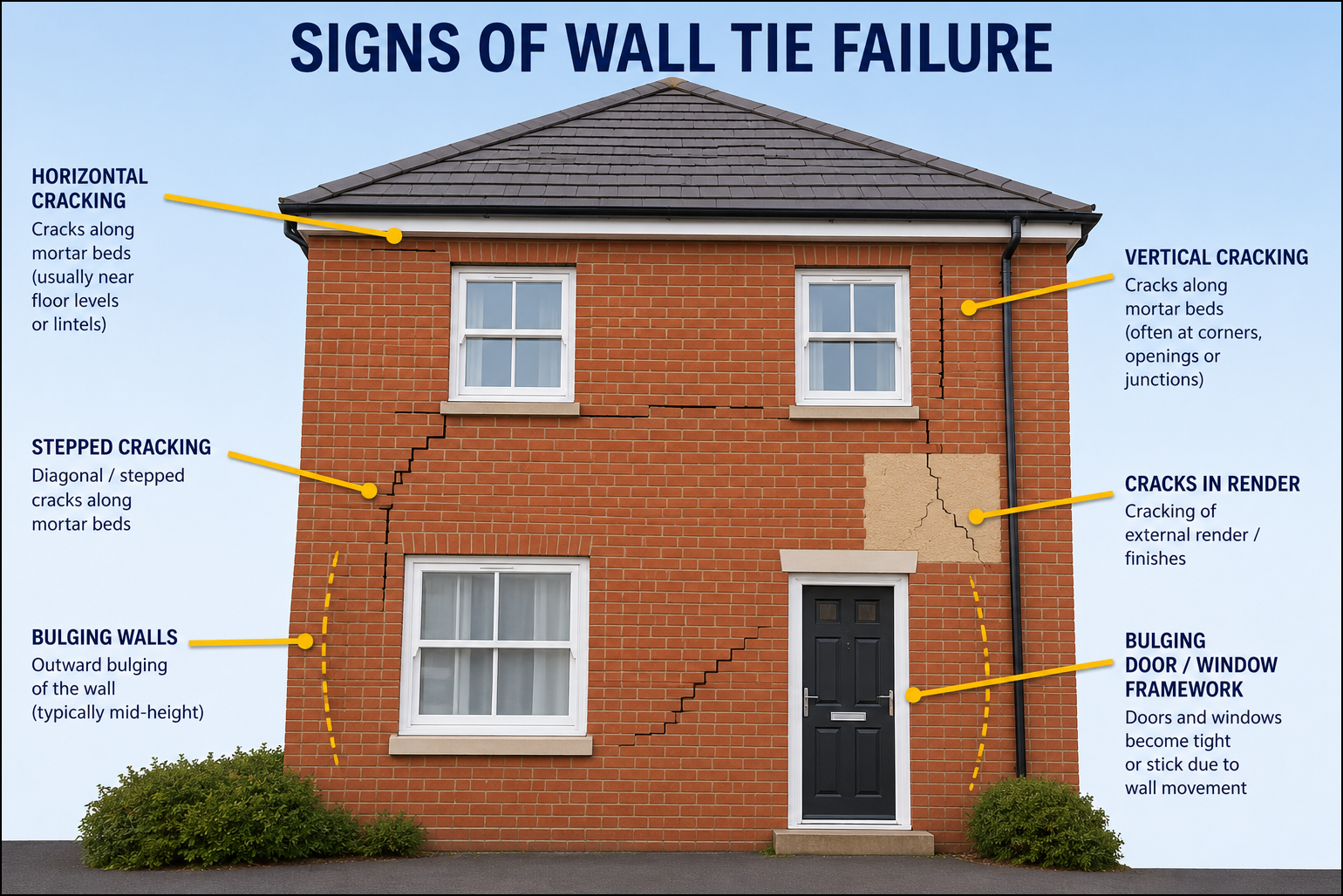
Horizontal cracking following mortar bed joints.
Cracking or disturbance around the positions of existing ties.
Bowing or movement of an external wall.
Evidence of corrosion identified during a survey or other building inspection.
A mortgage, valuation or building survey recommending further wall tie investigation.
These symptoms can have other causes, so the presence of cracking does not by itself prove wall tie failure. A suitable inspection should establish the cause before remedial work is specified.


What should I do next?
If wall tie failure is suspected, arrange an appropriate survey. The survey should identify the wall construction, condition and distribution of the existing ties, assess any associated damage and determine whether remedial work is required.